
CPR Course for Childcare Workers
A child can go from happily playing to needing urgent help in seconds. In early learning and care settings, that reality shapes how staff prepare for every shift. A CPR course for childcare workers is not just another box to tick. It is practical training that helps educators respond calmly, protect children in an emergency, and meet the expectations of employers, families, and the broader care sector.
For anyone working in childcare or planning to enter the industry, CPR training sits close to the core of the role. Children are active, curious, and still developing the awareness to avoid risk. Even in well-run centres with strong supervision, incidents can happen. Choking, breathing difficulties, allergic reactions, near drowning, and sudden medical episodes all require a fast, informed response.
Why CPR matters in childcare
CPR training matters in every workplace, but childcare settings carry a unique level of responsibility. Staff are caring for infants, toddlers, and young children who may not be able to explain what is wrong or follow instructions clearly in a crisis. The first few minutes after an emergency begins can make a real difference.
That is why a CPR course for childcare workers focuses on more than the technique itself. It helps build the confidence to assess a situation, act quickly, and work within established emergency procedures. In a childcare environment, that might mean responding while keeping other children safe, communicating with colleagues clearly, and staying composed under pressure.
There is also the trust factor. Families leave their children in the care of educators expecting a safe and professional environment. Current CPR skills help support that trust. For employers, it is also part of maintaining a workforce that is prepared, compliant, and job-ready.
What a CPR course for childcare workers usually covers
A good course is practical, straightforward, and relevant to real care settings. While course content can vary depending on delivery and context, most CPR training for childcare workers covers how to recognise an emergency, when to call for help, how to perform CPR on an infant or child, and how to use an automated external defibrillator, commonly called an AED.
This matters because CPR is not one-size-fits-all. The response for an infant differs from the response for an older child or an adult. Anyone working in childcare needs training that reflects those differences, not a generic overview that leaves too much to assumption.
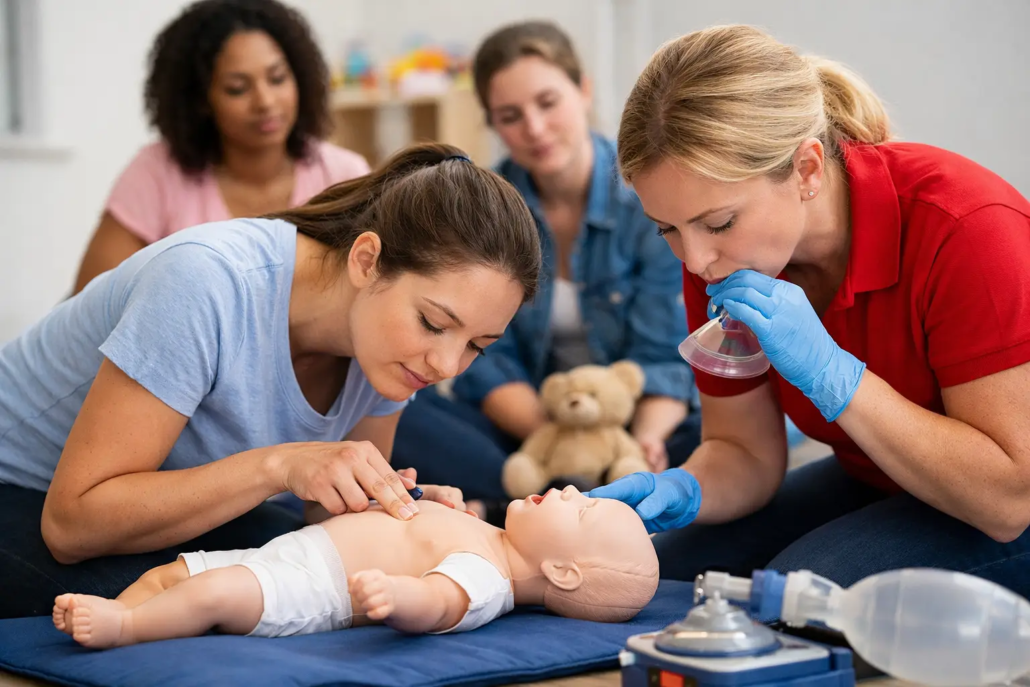
You should also expect hands-on practice. In this kind of training, theory is useful, but confidence usually comes from repetition. Practising compressions, rescue breaths, positioning, and response steps in a supervised environment helps turn information into action.
Compliance and workplace expectations
For childcare workers in Australia, first aid and CPR requirements are tied closely to workplace regulations and employer expectations. Exact needs can depend on the service type, job role, and state or territory requirements, so it is always worth checking what applies in your setting.
In many cases, employers will expect staff to hold current CPR certification, particularly in early childhood education and care environments. If you are applying for roles, being up to date can strengthen your employability. It shows that you are prepared for frontline responsibility and understand the practical realities of working with children.
If you are already employed, staying current matters just as much. CPR skills need regular refreshing because emergency response relies on speed and accuracy. It is easy to feel that once trained means always ready, but that is not always true in practice. Techniques, guidance, and confidence can all fade if training is left too long between updates.
Who should take a CPR course
The short answer is simple: anyone working directly with children should strongly consider it, and in many roles it will be expected. That includes early childhood educators, childcare assistants, family day care educators, outside school hours care staff, and support workers involved in children’s programs.
It is also highly relevant for students preparing to enter childcare for the first time. Completing CPR training before you start applying for work can make you more competitive and help you feel more prepared walking into your first placement or interview.
For career changers, this can be one of the first practical steps into the sector. It is a small qualification with clear workplace value. For existing workers, it is a way to maintain professional standards and continue building a reliable skill set that employers recognise.
How to choose the right CPR training
Not all training experiences feel the same, even when the unit outcome looks similar on paper. If you are choosing a CPR course for childcare workers, relevance and delivery quality matter.
Start by checking that the training is nationally recognised and delivered by a registered training organisation. That gives you confidence that the course meets recognised standards and will be understood by employers across Australia.
Next, consider whether the training reflects childcare scenarios. A course that includes infant and child response, real-world examples, and practical instruction from experienced trainers will usually feel more valuable than one delivered in a purely generic way. In care-focused industries, context matters. People learn better when they can picture exactly how the training applies to their role.
Flexibility is another factor. Many learners are balancing work, family commitments, or a transition into study. A course that is clearly structured and easy to attend can make the process less stressful. At the same time, convenience should not come at the cost of hands-on practice. CPR is a practical skill, so there needs to be real opportunity to demonstrate competence.
What to expect on the day
For many people, CPR training feels a bit intimidating before they start. That is normal, especially if you have never worked in an emergency response setting before. The good news is that a well-run course is designed to support learners, not catch them out.
You will usually work through core emergency response steps, observe demonstrations, and complete practical activities. Trainers may use scenarios to help you think through decision-making, communication, and timing. The goal is not perfection in a high-pressure performance. The goal is to help you respond safely, correctly, and with more confidence than you had before.
This is one reason supportive trainers matter so much. In care-sector training, learners often come from different backgrounds. Some are experienced workers refreshing their credentials. Others are entering the workforce for the first time. Good training meets both groups where they are and keeps the focus on practical competence.
The career value of CPR training in childcare
CPR certification on its own will not qualify you for every childcare role, but it can absolutely strengthen your profile. Employers value candidates who understand the responsibilities of working with children and who have already taken steps to prepare for them.
It also signals something beyond compliance. It shows initiative, professionalism, and readiness to work in settings where duty of care is taken seriously. In a sector built on trust, those qualities matter.
For students looking at broader pathways in care and support, CPR training can also sit neatly alongside first aid and formal vocational study. If you are building a career in childcare, community services, disability support, or other frontline roles, practical certifications can support both immediate employability and longer-term progression. That is part of why specialist providers such as Equinox College place so much emphasis on training that connects directly to real workplace needs.
A small course with a big impact
Some training changes your resume. Some training changes how you show up at work. CPR does both. It gives childcare workers a clear, practical skill that can help protect children, support team safety, and meet employer expectations.
If you are choosing your next step into childcare, or keeping your qualifications current, this is one course that carries weight well beyond the classroom. The right training will not remove every challenge from the job, but it can help you walk into your role better prepared to care for children when it matters most.

 07 3106 3859
 admin@equinoxsg.com.au
 Shop 14, Level 1-110 Morayfield Rd, Caboolture South, QLD 4510
 PO Box 909, Morayfield QLD 4506

Leave a Reply
Want to join the discussion?Feel free to contribute!