
CPR Refresher Course Guide for Busy Workers
You do not want to be thinking about your CPR steps for the first time in an emergency. That is exactly why a CPR refresher course guide matters, especially if you work in aged care, disability support, community services, education, fitness, or any frontline role where a quick response can save a life.
CPR is one of those skills that can fade faster than people expect. Even if you completed training before, confidence can slip when you have not practised compressions, timing, or the order of response for a while. A refresher helps bring that knowledge back into focus, and for many workers, it is also a requirement to stay current and employable.
Why a CPR refresher matters
In care and support settings, emergencies are rarely convenient or predictable. A client can collapse during a home visit. A resident can become unresponsive during a routine shift. A child can stop breathing at a community program. In those moments, hesitation matters.
A refresher course is not just a box to tick. It gives you a chance to practise the sequence again, use updated guidance, and rebuild the muscle memory that supports calm action under pressure. For people already working in care roles, that confidence carries into every shift. For people preparing to enter the sector, current CPR training shows employers you are ready for real workplace expectations.
There is also a practical reason. CPR certification generally needs regular renewal to remain current. If your job requires it, leaving renewal too late can affect your ability to work, apply for roles, or meet compliance obligations.
CPR refresher course guide: when should you renew?
In Australia, CPR is commonly recommended to be refreshed every 12 months. That annual cycle is widely recognised across workplaces because CPR is a high-stakes, perishable skill. While your broader first aid qualification may last longer, CPR usually has its own shorter renewal timeframe.
That said, the right timing can depend on your employer, industry, and role responsibilities. An aged care provider, disability service, childcare centre, school, or sporting organisation may have its own policies about how often staff must update training. If you are unsure, check your workplace requirements early rather than waiting until your certificate has lapsed.
If you are between jobs, refreshing before you apply can make a difference. Employers in care settings often look for applicants who already hold current, relevant certifications. It shows initiative and can remove delays during recruitment.
What you can expect in a refresher course
A CPR refresher is usually shorter and more focused than a full first aid course. It is designed to revisit the core knowledge and practical steps needed to respond to a cardiac or breathing emergency. You are not starting from scratch, but you are expected to actively participate and demonstrate the required skills.
Most refresher training covers how to assess the scene for safety, check for responsiveness, call for help, and begin CPR. You will also revisit rescue breaths, chest compressions, and the use of an automated external defibrillator, often called an AED. Depending on the course, you may work through scenarios involving adults, children, and infants.
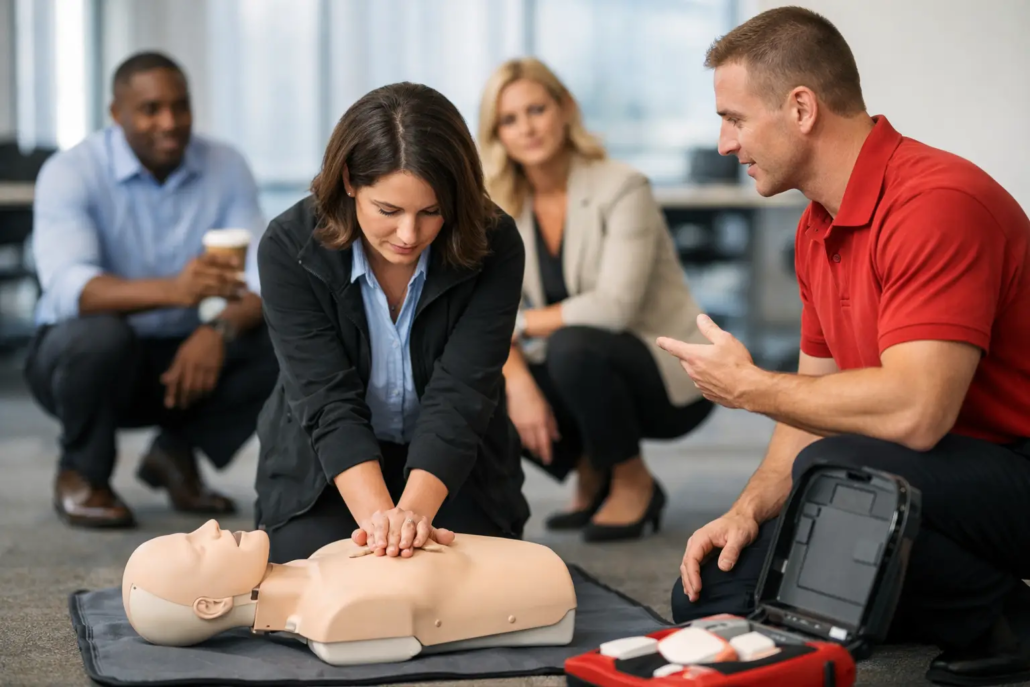
The practical component matters most. You should expect hands-on assessment using a manikin on the floor. That is important to keep in mind if you have mobility concerns, pregnancy, or an injury. Some providers can discuss reasonable adjustments, but CPR competency still needs to meet the unit requirements.
Who should book a refresher?
A refresher is relevant for more people than many assume. It is clearly important for nurses, support workers, aged care employees, disability support staff, teachers, education support staff, fitness professionals, and community service workers. It also suits parents, foster carers, volunteers, and anyone who wants to stay prepared.
For students planning a career in care or community services, updating CPR early can be a smart move. It adds immediate value to your resume and gives you practical confidence before placement or employment. In sectors built on trust and duty of care, employers notice candidates who come prepared.
If your certificate is close to expiry, the decision is straightforward. If it expired some time ago, a refresher may still be suitable, though in some cases a provider may recommend completing the course again depending on how long it has been and what your workplace expects.
How to choose the right CPR training provider
Not every course offers the same learning experience. The certificate itself matters, but so does the quality of delivery. A good provider makes the training clear, supportive, and relevant to the workplaces you are moving into.
Look for nationally recognised training delivered by qualified trainers with real industry experience. That is especially valuable if you work in human services, where context matters. A trainer who understands aged care, disability support, or community settings can connect CPR skills to the kinds of situations you may actually face on the job.
Flexibility is also worth considering. Many adult learners are balancing work, family responsibilities, or a career change. A course that offers straightforward booking, efficient delivery, and clear assessment requirements can make renewal much less stressful.
Support matters too. Some learners feel nervous returning to practical assessment, especially if it has been a while since their last course. A welcoming environment with patient trainers can make a real difference to confidence and performance.
Common mistakes people make before a refresher
One of the biggest mistakes is waiting until the last minute. Courses can book out, and if your job depends on current CPR, a small delay can turn into a bigger issue. Booking ahead gives you more choice and less pressure.
Another common mistake is assuming all previous knowledge will come back instantly. People often remember the broad idea of CPR but forget details like compression rate, the response sequence, or AED prompts. That is normal. The point of the refresher is to bring those details back into working memory.
Some people also underestimate the physical side of assessment. Chest compressions require effort and correct technique. Wearing comfortable clothing and arriving ready for practical participation will help.
How a refresher supports career readiness
For many Australians, CPR training sits at the intersection of compliance and employability. It helps you meet job requirements, but it also signals something more important – that you are prepared to act when someone needs help.
In care and community roles, employers want workers who can combine compassion with practical capability. Current CPR training supports that expectation. It tells an employer you understand basic emergency response, value professional standards, and are serious about maintaining your skills.
This matters whether you are entering the workforce for the first time or building on existing experience. School leavers can use current CPR to strengthen early applications. Career changers can show they are ready for frontline work. Existing workers can keep their credentials current and continue progressing with confidence.
For students training in support roles, it also bridges the gap between classroom learning and workplace reality. At Equinox College, that practical connection is central to how learners build confidence for real care environments.
CPR refresher course guide: questions to ask before you book
Before enrolling, it helps to ask a few practical questions. Is the training nationally recognised? Does it meet your workplace or industry requirements? How much of the course is practical? What should you bring on the day? How long will the session take, and when will your statement of attainment be issued?
If you have any physical limitations, ask about participation requirements in advance. If you need the course for work by a specific date, confirm assessment and issuance timeframes. These small checks can prevent stress later.
It is also worth asking whether the training environment suits adult learners who may be returning to study after a long break. A supportive setting can make the experience far more manageable, especially if formal training has not been part of your routine recently.
Building confidence, not just currency
The best reason to refresh CPR is not the certificate. It is the confidence that comes from knowing what to do when seconds count. A current qualification helps you stay job-ready, but practical confidence is what carries into workplaces, placements, and real emergencies.
If your CPR is due for renewal, treat it as an investment in your capability, not just your compliance. Skills like these support safer workplaces, stronger teams, and better care for the people who rely on you. A short course can have a long impact, and that is worth making time for.

 07 3106 3859
 admin@equinoxsg.com.au
 Shop 14, Level 1-110 Morayfield Rd, Caboolture South, QLD 4510
 PO Box 909, Morayfield QLD 4506

Leave a Reply
Want to join the discussion?Feel free to contribute!