
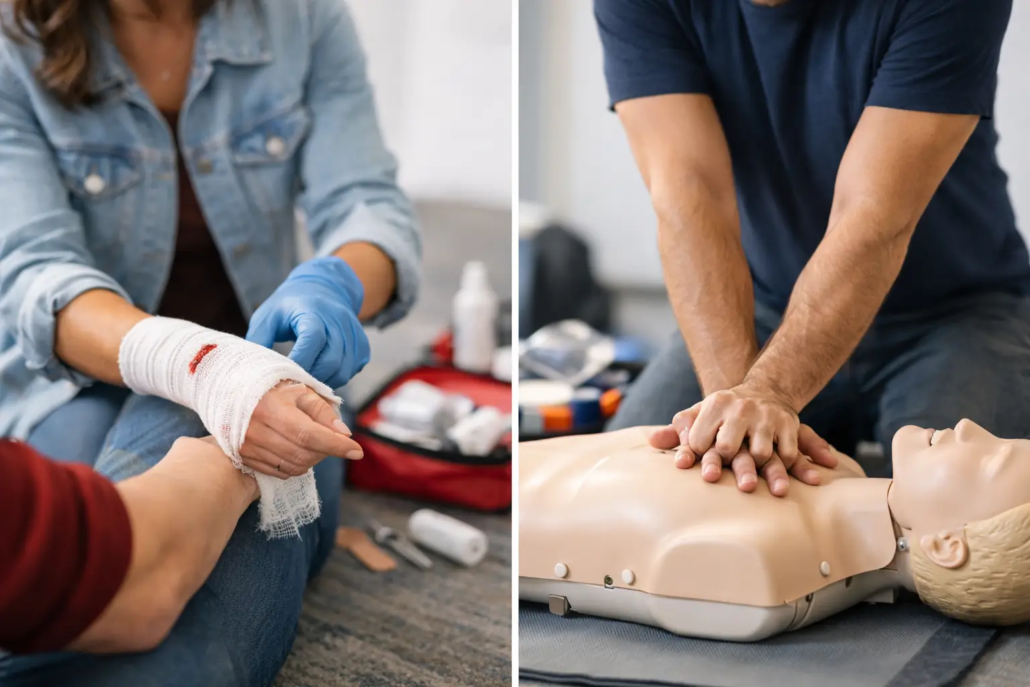
First Aid vs CPR Training: Which Do You Need?
A resident becomes dizzy during morning care. A colleague slips in the bathroom. A client suddenly stops responding. In care and community services, emergencies do not always arrive with warning. When weighing first aid vs CPR training, the best choice is not about picking the more impressive certificate. It is about understanding the skills you may need to respond calmly, safely and within your role.
For many people entering aged care, disability support, community services or other frontline roles, first aid and CPR training work best together. They cover different parts of an emergency response, and employers may ask for one or both depending on the workplace, the people you support and organisational policy.
First Aid vs CPR Training: The Key Difference
CPR training focuses on what to do when a person is unresponsive and not breathing normally. It teaches you how to assess the situation, call for help, provide cardiopulmonary resuscitation and use an automated external defibrillator, commonly called an AED, where available.
First aid training is broader. It includes CPR, then builds on it with practical skills for recognising and responding to a wider range of illnesses and injuries. Depending on the course, this may include bleeding, burns, fractures, choking, allergic reactions, asthma, seizures, diabetic emergencies, shock and other common first aid situations.
Put simply, CPR is one critical emergency skill. First aid is a wider set of response skills that includes CPR.
That distinction matters because many emergencies do not involve cardiac arrest. A support worker may need to respond to a fall, a skin tear, a seizure, a heat-related illness or a suspected allergic reaction long before an ambulance arrives. First aid training helps build the judgement to assess what is happening, provide appropriate immediate care and seek further help when needed.
What You Learn in a CPR Course
A CPR course is often the right option when you need a focused refresher or when your workplace specifically asks for current CPR competency. Training is practical and centred on high-pressure situations where clear actions can make a real difference.
Participants commonly learn how to check for danger, gain consent where possible, assess responsiveness, call emergency services, manage an unresponsive person and perform CPR on an adult manikin. Training also covers the use of an AED and the importance of following its prompts. Some courses may address considerations for infants or children, but learners should always check the specific course details before enrolling.
CPR training is especially valuable for workers who support people with complex health needs, people working in environments with identified health risks, and anyone who wants confidence to act during a life-threatening emergency. It can also suit people whose first aid qualification is still current but who need to renew their CPR skills.
Regular practice matters. CPR is physical, time-sensitive and easy to forget if you have not used it. Australian first aid guidance commonly recommends refreshing CPR skills every 12 months, although an employer, regulator or industry body may set its own requirements.
What You Learn in a First Aid Course
A first aid course prepares you for the moments that happen more often in everyday workplaces and community settings. You learn how to make an initial assessment, reduce immediate risk, offer basic treatment and communicate useful information to emergency services or health professionals.
The course usually includes CPR, but it also develops a broader approach to decision-making. For example, a person who has fallen may need reassurance, monitoring and protection from further harm rather than being moved quickly. Someone experiencing an asthma flare-up may need help with their own medication and urgent escalation if symptoms worsen. The right response depends on the situation, your training, workplace procedures and the person’s care plan.
For learners preparing for aged care or disability support work, this wider knowledge can be particularly useful. People receiving support may have individual health conditions, communication needs or behaviour support plans that affect how an incident should be managed. First aid training does not replace clinical advice, medication training or workplace policies. It does give you a stronger foundation for recognising when a situation needs immediate action.
Many workplaces ask staff to refresh first aid qualifications more regularly than the certificate’s overall period of validity might suggest. A common recommendation is to update first aid skills every three years and CPR annually. Always confirm what your employer or placement provider requires.
Which Training Do Care and Support Workers Need?
There is no single answer for every role. A short-term volunteer position, a school requirement and a permanent disability support role can have very different expectations. The job advertisement, organisation’s policy and relevant industry requirements should guide your decision.
If you are starting out in a care or community services career, first aid training is often the more complete choice because it includes CPR and prepares you for a wider range of incidents. It can help you feel more ready for practical placements, interviews and frontline work where client wellbeing is central.
CPR-only training may be the better fit if you already hold current first aid certification and simply need an annual CPR update. It can also suit workers whose employer has clearly stated that CPR is the required training. Choosing CPR alone when a role requires a full first aid qualification, however, may leave you short of the skills or evidence an employer expects.
Before booking, ask three straightforward questions: What qualification or unit does the employer require? When does your current training expire? Does the role involve working independently, supporting vulnerable people or responding to health-related incidents? These answers will usually make the right pathway clearer.
Why Practical Training Builds Confidence
Emergency response is not just about remembering a sequence of steps. It is also about staying focused when someone is distressed, when bystanders are anxious or when you are uncertain about what happened. Quality training gives you the opportunity to practise skills, ask questions and receive guidance from an experienced trainer.
For people returning to study, changing careers or entering the workforce for the first time, this practical environment can reduce the pressure of learning. You do not need previous healthcare experience to begin. What matters is a willingness to participate, practise and take your responsibility seriously.
Training should also reinforce the limits of your role. A first aider provides immediate assistance, follows workplace procedures and calls for professional help when needed. They do not diagnose conditions or take on tasks they are not trained or authorised to perform. Knowing when to escalate is part of being capable and professional.
Choosing a Course That Supports Your Career
When comparing first aid and CPR courses, look beyond the course name. Check that the training is nationally recognised where this is required, that it includes the practical components you need and that the delivery format suits your circumstances. If you are studying for a care-sector role, consider whether the trainer understands the real settings where you may use these skills.
At Equinox College, practical training is designed to help learners build confidence for real workplaces, not simply complete an assessment. That is especially meaningful in care and support roles, where your calm response can help protect a client, colleague or member of the public while further help is arranged.
Your first aid certificate is more than a line on a résumé. It is preparation for the moment someone needs a steady person nearby – and the confidence to take the right next step.
 07 3106 3859
 admin@equinoxsg.com.au
 Shop 14, Level 1-110 Morayfield Rd, Caboolture South, QLD 4510
 PO Box 909, Morayfield QLD 4506

Leave a Reply
Want to join the discussion?Feel free to contribute!