
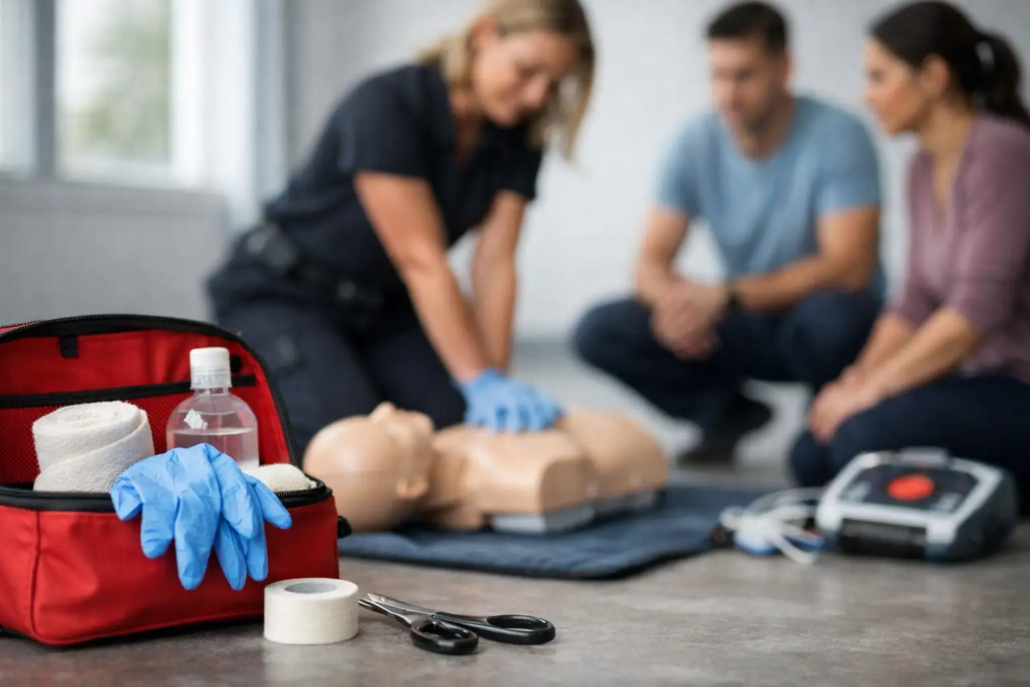
First Aid Course Review: What Matters Most
A first aid course review is most useful when it asks one practical question: will this training help you respond calmly and correctly when someone needs help? For people entering aged care, disability support, community services or other frontline roles, first aid is not simply a certificate to add to a résumé. It is a skill set that can shape how prepared you feel when a client, colleague, family member or member of the public becomes unwell or injured.
Price and convenience matter, particularly when you are balancing work, family and study. But they should not be the only deciding factors. The right course gives you current knowledge, hands-on practice and clear guidance from a trainer who understands how first aid situations unfold in real workplaces.
What a first aid course review should assess
A good first aid course should cover more than a slideshow and a quick multiple-choice quiz. First aid relies on judgement as well as knowledge. You need to recognise a hazard, assess what is happening, call for assistance when required and provide care within your level of training.
When reviewing a course, start by checking exactly what you will receive on successful completion. In Australia, many workplaces require specific nationally recognised units of competency, often including Provide First Aid and CPR training. Requirements vary by employer, industry, role and state or territory, so it is sensible to confirm what your workplace or prospective employer expects before enrolling.
The course description should also be clear about delivery. Some courses include online learning before a face-to-face practical session. This can suit busy learners, provided there is enough in-person time to practise essential techniques and ask questions. A fully practical component is especially valuable for anyone who has not completed first aid training before or wants more confidence using their skills.
Practical learning makes the difference
Reading about CPR is not the same as performing compressions on a manikin. Likewise, it is easier to understand recovery positions, bandaging, use of an automated external defibrillator and emergency response steps when you have practised them under guidance.
Look for training that gives you opportunities to work through realistic scenarios. In care and support settings, an incident may happen in a client’s home, a community venue, a residential facility or while supporting someone in public. A trainer who can connect course content to these environments helps make the learning more memorable and relevant.
Practical assessment should feel purposeful, not intimidating. You may be asked to demonstrate CPR, respond to a simulated emergency or explain the actions you would take. These activities show both you and the trainer where you are confident and where you need extra support. That feedback is one of the most valuable parts of the course.
Recognition, currency and workplace expectations
A certificate is useful only when it is recognised for the purpose you need it for. Before booking, check whether the course is delivered by a registered training organisation and whether the unit of competency aligns with your employer’s requirements. Be cautious of vague claims that a course is suitable for every workplace without naming the training or explaining its assessment process.
It also helps to understand that first aid skills need refreshing. Employers and industry bodies may set their own renewal expectations, and CPR is commonly refreshed more frequently than broader first aid training. Your certificate may display an issue date, but staying current is also about retaining the ability to respond effectively. Skills such as CPR can fade when they are not practised.
For existing workers, regular refresher training is a chance to revisit techniques, update knowledge and raise questions from situations encountered on the job. For new entrants, it can be an early introduction to the professional responsibility expected in care and community services.
Trainer experience and student support matter
First aid courses often bring together people with very different levels of experience. One learner may be completing training for a new support work role, while another may have years of workplace experience but feel nervous about assessment. A supportive trainer can make the room feel welcoming without lowering the standard of training.
In your review, consider whether the provider explains how trainers support learners who need clarification, extra time or help with language and literacy. Training should be accessible, respectful and clear. You should never leave a practical session unsure about the basic steps to take in an emergency.
Trainer experience also matters. Educators with real insight into care, support or emergency response environments can explain why procedures exist, not only what to memorise. They can discuss communication, personal safety, infection control and the importance of handing over accurate information to emergency services or workplace supervisors.
At Equinox College, practical learning is connected to the realities of care and community sector work, helping students build skills they can carry into their next role with confidence.
Comparing course options without choosing on price alone
A low-cost course may be suitable if it meets your workplace requirements, offers meaningful practical assessment and is delivered by a quality provider. However, a cheaper option can become poor value if the course is unclear, rushed or leaves you without the support to complete your assessment successfully.
When comparing providers, check these five details before you enrol:
- the exact unit or units of competency offered and whether they meet your employment needs
- how much practical, face-to-face training and assessment is included
- what pre-course learning, identification or physical participation requirements apply
- when and how you will receive your statement of attainment after successful completion
- whether the trainer and provider offer clear support before, during and after the course.
Course duration is another area where context matters. A short refresher may be appropriate for someone who already understands the content and needs to renew their skills. A learner with no previous experience may benefit from a format that allows more time for demonstrations, questions and repeated practice. Faster is not always better if it means leaving unsure of what to do in a real emergency.
Questions to ask before you book
A transparent provider should be able to answer practical questions directly. Ask whether there are online components to complete beforehand, what you need to bring, whether you will need to perform CPR on the floor and what alternatives or support may be available if this is difficult for you.
You can also ask how assessment works and what happens if you need further practice. These questions are not a sign that you are unprepared. They show that you are taking the training seriously and want to choose a course that suits your needs.
If first aid is required for a job, ask your employer whether there are additional policies you need to know. Some workplaces have procedures for incident reports, contacting family members, infection prevention, medication or calling emergency services. A first aid course builds core response skills, while workplace procedures explain how those skills fit within your particular role.
Confidence is the outcome worth looking for
The best first aid training does not make unrealistic promises that you will feel ready for every emergency. Real incidents can be confronting, and every situation is different. What quality training can do is give you a clear starting point: assess the scene, seek help, use your training, communicate clearly and continue to care until help arrives or the situation is safely managed.
That confidence has value well beyond a workplace requirement. It can travel with you to a family barbecue, a sporting event, a client visit or an ordinary day when something suddenly goes wrong. Choose a course that respects the seriousness of that responsibility and gives you room to practise, ask questions and leave knowing your next step.
 07 3106 3859
 admin@equinoxsg.com.au
 Shop 14, Level 1-110 Morayfield Rd, Caboolture South, QLD 4510
 PO Box 909, Morayfield QLD 4506

Leave a Reply
Want to join the discussion?Feel free to contribute!