
How Long Does CPR Certification Last?
You are ready to apply for a care role, update your compliance records, or enrol in further training – and then the question comes up fast: how long does CPR certification last? For many Australians working in aged care, disability support, community services, childcare, fitness, or other frontline roles, CPR certification typically lasts 12 months before it should be renewed.
That short renewal window can surprise people, especially if they have completed broader first aid training that lasts longer. CPR is treated differently because it is a hands-on, high-stakes skill. When someone goes into cardiac arrest, confidence, speed, and correct technique matter. Refreshing your training every year helps make sure your response is current, practical, and aligned with the latest guidance.
How long does CPR certification last in Australia?
In Australia, CPR certification is generally recommended to be renewed every 12 months. This applies to the nationally recognised CPR unit commonly completed by people who need to meet workplace or industry requirements.
If you are comparing CPR with a full first aid certificate, this is where confusion often starts. A broader first aid qualification may be valid for longer, often up to three years, while the CPR component is usually refreshed annually. So even if your first aid statement of attainment still appears current, your CPR training may already be due for renewal.
For students and workers in care-based industries, that difference matters. Employers do not usually look only at whether you have ever done CPR. They often want to see that your CPR training is current and completed within the last 12 months.
Why CPR needs yearly renewal
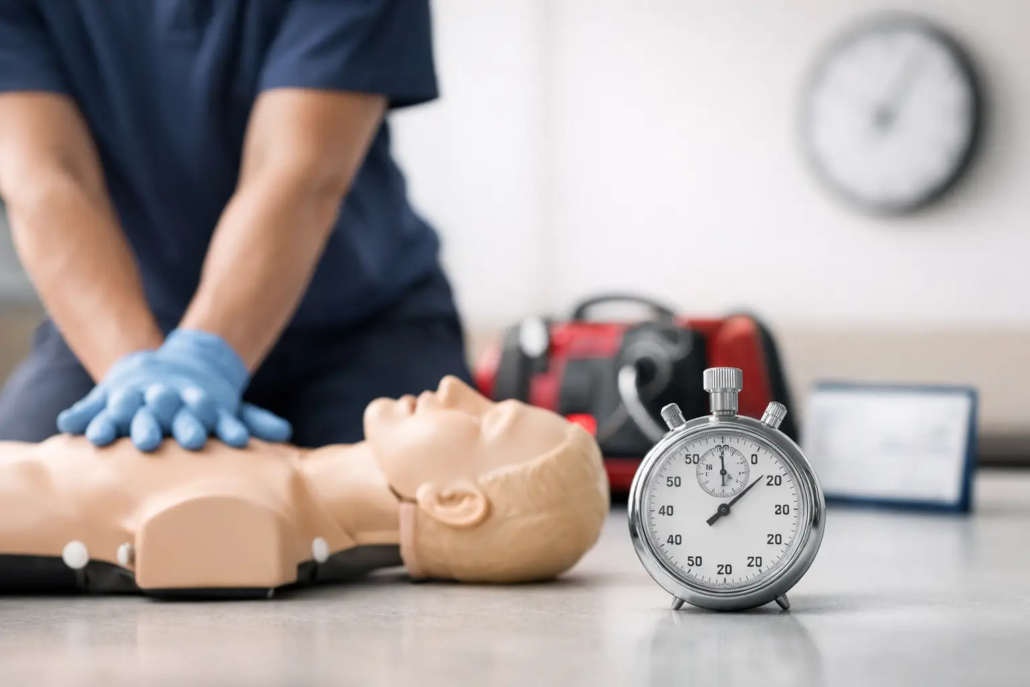
CPR is one of those skills where theory alone is not enough. You need to remember the steps, but you also need to perform them under pressure. Chest compression depth, timing, rescue breaths, use of an AED, and the sequence of response all need regular practice.
Guidelines and best practice can also change over time. Annual renewal helps keep your training aligned with current expectations in Australian workplaces. Just as importantly, it helps reduce hesitation. In a real emergency, people rarely have time to think through old course notes. They rely on what feels familiar.
That is why employers across health, care, education, sport, and community services often expect yearly CPR updates even when staff are experienced. Practical confidence fades if it is not revisited.
Skill retention is a real issue
Most people do not use CPR often, and that is a good thing. But infrequent use also means the skill can drop away quickly. A worker might remember calling Triple Zero and starting compressions, yet forget details about compression rate, ratio, or AED prompts.
A short annual refresher is less about repeating the same course for no reason and more about keeping the response sharp. For anyone supporting vulnerable people, that is a worthwhile investment.
What can affect how long your CPR certification lasts?
The standard answer is 12 months, but in practice, a few factors can shape what that means for you.
Your employer may have its own compliance policy. Some workplaces are strict about renewal dates and expect staff to re-certify before the certificate expires. Others allow a small grace period for booking training, but that is not something to rely on if your role depends on current credentials.
Industry expectations also matter. In aged care, disability support, childcare, schools, fitness, and other public-facing sectors, current CPR certification is often seen as essential. Even where annual renewal is a recommendation rather than a legal rule in every situation, employers may still treat it as mandatory for rostered staff.
The training unit you completed can also make a difference. If you are reviewing old paperwork, check exactly what unit was issued and the date it was completed. Do not assume a broader first aid certificate automatically means your CPR is still current.
How to check if your CPR needs renewing
If you are not sure whether your certificate is still current, start with the completion date on your statement of attainment or training record. Count forward 12 months. If you are close to that date, it is smart to book renewal early rather than wait until the last minute.
This matters even more if you are job hunting. Many employers want evidence of current CPR before interview, onboarding, or placement. If your training expires while you are applying, it can create an avoidable delay.
For current workers, late renewal can also affect shifts, compliance checks, or workplace eligibility. In practical terms, it is much easier to keep CPR current than to explain a gap.
Signs it is time to book now
If your certificate is older than 11 months, if you are applying for care-sector roles, or if your workplace has asked for updated compliance documents, it is worth arranging renewal straight away. The same applies if you simply feel rusty. Confidence is part of competence.
Does expired CPR certification mean you have to start over?
Usually, no. If your CPR certificate has lapsed, you can generally complete the CPR course again and regain currency. Because CPR is already a short-form practical certification, renewal often looks very similar to the original training.
That said, letting it expire can still create problems. You may not meet employer requirements in the meantime, and you may need to pause certain duties until your training is current again. If you work in a regulated environment or support clients directly, that gap can have real consequences.
For people building a career in care and community services, staying ahead of expiry dates is one of the simplest ways to protect employability. It shows reliability as well as readiness.
CPR certification and first aid are not the same thing
One of the most common misunderstandings is assuming CPR and first aid run on the same timeline. They do not always.
A first aid qualification may remain valid for a longer period, but the CPR component often still needs yearly renewal. That means a person can hold a first aid certificate that looks current while their CPR update is overdue.
If you are entering aged care, disability support, mental health support, community services, or similar fields, this distinction is worth keeping front of mind. Employers often check both qualifications separately, especially where direct care or emergency response is part of the role.
Why current CPR matters for your career
For many people, CPR training starts as a requirement. Very quickly, it becomes something more useful than a compliance box. It supports confidence at work, strengthens your application for care roles, and helps you step into practical settings with more assurance.
Employers notice candidates who arrive prepared. A current CPR certificate suggests you understand workplace expectations and take responsibility seriously. In entry-level roles, that can help you stand out. For existing workers, it supports ongoing professional credibility.
This is especially relevant in sectors where trust matters. Families, clients, employers, and colleagues all want to know that the people providing support can respond in an emergency. Current training helps back that up.
At Equinox College, this practical focus matters because training should do more than meet a formal requirement. It should help students feel work-ready and confident in real care environments.
Choosing the right time to renew
The best time to renew is before your certificate becomes urgent. If you leave it until a job offer, placement request, or compliance audit is already in front of you, your options can feel rushed.
Booking early gives you breathing room. It also means your certification stays current without a break, which is especially useful if you are moving between employers, returning to work, or adding first aid credentials to strengthen your resume.
If you are planning a pathway into care or community services, think of CPR as part of your professional toolkit. Keeping it current is a small annual step that supports bigger career goals.
A simple rule to remember
If you are still asking how long does CPR certification last, the safest working answer is 12 months. Check your certificate date, confirm your workplace requirements, and renew before it lapses.
A current CPR qualification does more than satisfy policy. It helps you stay ready to act when someone needs help most, and that is exactly the kind of confidence worth carrying into any care-focused career.

 07 3106 3859
 admin@equinoxsg.com.au
 Shop 14, Level 1-110 Morayfield Rd, Caboolture South, QLD 4510
 PO Box 909, Morayfield QLD 4506

Leave a Reply
Want to join the discussion?Feel free to contribute!