
Should You Choose a CPR or First Aid Course?
A client suddenly becomes unresponsive during a shift. A colleague calls 000 while you assess the situation, start the right first steps and follow directions until help arrives. In a moment like this, choosing a CPR or first aid course is not simply about meeting a workplace requirement. It is about being prepared to respond calmly when someone needs you.
For people building a career in aged care, disability support, community services or other frontline roles, both courses can be valuable. The right choice depends on your role, employer expectations and the level of confidence you want when dealing with a medical emergency.
What is the difference between CPR and first aid training?
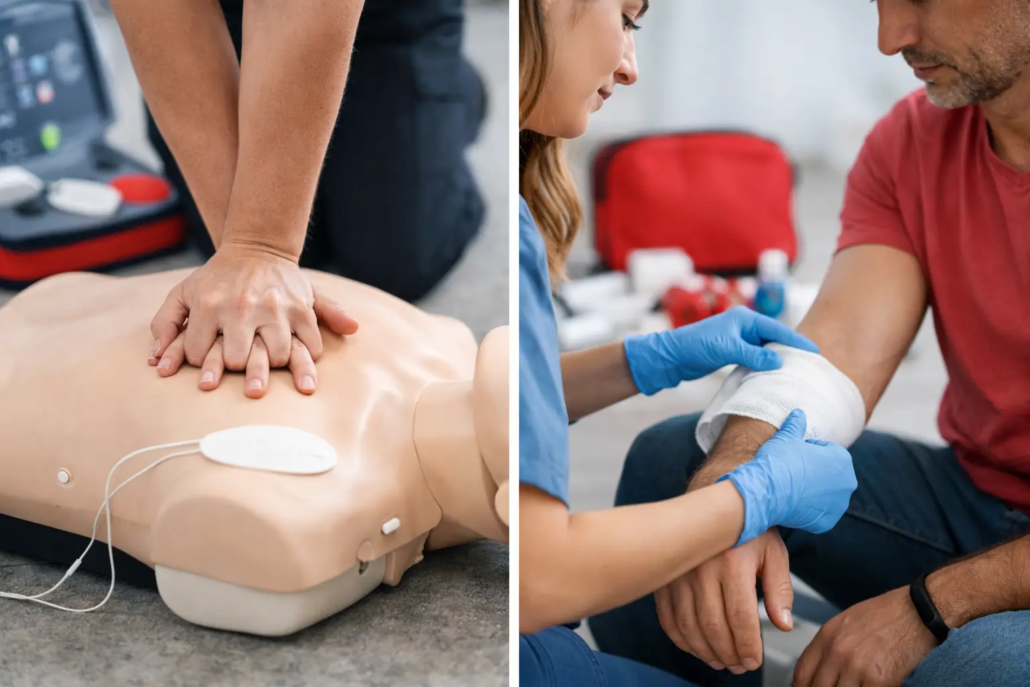
CPR stands for cardiopulmonary resuscitation. A CPR course focuses on the actions required when a person is unconscious and not breathing normally. Training commonly covers how to recognise cardiac arrest, call for emergency help, perform chest compressions, provide rescue breaths where appropriate, and use an automated external defibrillator (AED).
A first aid course has a broader focus. It prepares you to manage a range of common emergencies while waiting for professional medical assistance. Alongside CPR, this may include responding to bleeding, burns, fractures, choking, asthma, anaphylaxis, seizures, diabetic emergencies and shock. You will also learn how to assess a situation, protect yourself and others from danger, and provide reassurance to the person in your care.
In Australian vocational training, CPR is commonly delivered through the unit HLTAID009 Provide cardiopulmonary resuscitation. A broader first aid program commonly includes HLTAID011 Provide First Aid. The exact units and outcomes can vary between courses, so always check what is included before enrolling.
When a CPR course may be the right choice
A CPR course can suit you if you need a short, focused update or if your workplace specifically asks for current CPR training. It is particularly relevant for workers who may be first on the scene in an emergency, including support workers, aged care staff, educators, fitness professionals and people who work with children or vulnerable people.
The practical nature of CPR training matters. Reading about compressions is very different from practising them on a manikin, receiving feedback on your technique and becoming familiar with an AED. A quality course gives you the opportunity to build muscle memory before a real emergency places you under pressure.
CPR is also a useful choice for people who already hold a current first aid qualification but need to refresh their resuscitation skills. Many workplaces ask workers to update CPR more frequently than their full first aid training. The Australian Resuscitation Council generally recommends refreshing CPR skills every 12 months, although your employer, industry regulator or workplace policy may have its own requirements.
When a first aid course makes more sense
If you are entering a care or community services role, a first aid course is often the more practical starting point. Medical emergencies do not always involve cardiac arrest. You may need to support a person who is having an asthma attack, has fallen, is showing signs of an allergic reaction or has sustained an injury before paramedics arrive.
For support workers, broader first aid knowledge can help you respond appropriately while staying within your role. It can also help you notice when a situation is worsening and communicate clear information to emergency services, a supervisor or family members.
A first aid course may be expected in roles across aged care, disability support, early childhood settings, schools, sport and recreation, hospitality, and community programs. Requirements vary between employers, contracts and state or territory regulations. Before booking, review the job advertisement, speak with your manager or check the conditions of your placement.
First aid certificates are commonly refreshed every three years, with CPR refreshed annually. These timeframes are widely used as guidance, not a replacement for your employer’s policy. If your work involves high-risk activities or supporting people with complex health needs, your workplace may require more frequent training or additional specialised competencies.
How to choose between a CPR or first aid course
Start with the question: what do I need to be ready for at work? If you need a fast CPR renewal, a dedicated CPR course may be enough. If you are new to care work, returning to the workforce or applying for roles that ask for broader emergency response skills, first aid training is likely to give you more useful preparation.
It is also worth considering the roles you want next, not only the job you have now. A current first aid qualification can strengthen applications for entry-level support roles because it shows employers that you understand basic safety and emergency responsibilities. It will not replace a vocational qualification where one is required, but it can complement your training and demonstrate that you are prepared for the realities of frontline work.
Check whether the course is nationally recognised and delivered by a registered training organisation. Look closely at the unit codes listed, the assessment approach, any entry requirements and whether you will need to complete practical assessment in person. CPR and first aid are hands-on skills. Practical practice and observation are an essential part of learning how to respond safely.
Course length matters too, but it should not be your only deciding factor. A short course may be convenient, particularly when you are balancing work, family and study. However, you should still have enough time to ask questions, practise key skills and understand why each action is taken. The aim is not just to receive a statement of attainment. It is to leave feeling capable of taking action.
A practical checklist before you enrol
Before choosing a course, confirm four things: the units you will receive, whether your employer accepts them, when you will need to renew them, and whether the course includes face-to-face practical assessment. These details can prevent the frustration of completing training that does not meet a workplace requirement.
If you are applying for work in aged care or disability support, ask potential employers whether they require first aid before you commence, or whether it can be completed during onboarding. Some organisations have specific policies due to the needs of the people they support.
Why first aid confidence matters in care roles
In care and support settings, first aid knowledge is about more than technical steps. The person in front of you may be frightened, in pain or unable to explain what is happening. Your ability to stay calm, seek help promptly and provide appropriate initial support can make a meaningful difference to their experience.
Training can also help you understand your limits. First aiders do not diagnose conditions or replace paramedics, nurses or doctors. Their role is to provide immediate care within their training, monitor the person, follow workplace procedures and hand over accurate information when further help arrives. Knowing when to escalate is just as important as knowing how to respond.
For people who are new to the sector, this can ease a common worry: “What if something happens and I do not know what to do?” No course can remove every uncertainty, because real situations differ. But practical training gives you a clear framework to follow and the confidence to take the next appropriate step rather than freezing.
Building skills that support your career
CPR and first aid training can sit alongside a larger career pathway in human services. They are practical, recognised skills that complement study in areas such as individual support, disability support, community services and mental health. They also show that you take the safety and wellbeing of the people you support seriously.
At Equinox College, training is designed with the realities of care-sector work in mind. The strongest learning happens when practical skills, industry expectations and supportive guidance come together, helping students move towards employment with greater confidence.
Whether you choose CPR alone or a broader first aid course, choose training that reflects the responsibilities of the role you want. The certificate matters, but the real value is knowing that when a person needs help, you can respond with care, clarity and purpose.
 07 3106 3859
 admin@equinoxsg.com.au
 Shop 14, Level 1-110 Morayfield Rd, Caboolture South, QLD 4510
 PO Box 909, Morayfield QLD 4506

Leave a Reply
Want to join the discussion?Feel free to contribute!